SAP S/4HANA Public Cloud continues evolving with each quarterly release, and the 2508 upgrade cycle brings critical updates across Identity & Access Management (IAM), business catalogues, restriction types, and SAP-delivered role templates. These changes are designed to strengthen security, optimise business role design, and align system authorisations with SAP's best-practice access model.
To ensure a smooth transition to release 2508, organisations must adopt a proactive IAM governance model. This comprehensive guide explains the exact steps, methodology, governance approach, and controls needed to execute IAM changes successfully during this specific upgrade cycle. The structured approach outlined here will help organisations navigate the complexities of IAM release management whilst maintaining security compliance and operational continuity throughout the upgrade process.
Why Public Cloud Authorization Release Management Is Critical for Enterprise
Recommended IAM Upgrade Framework for Release
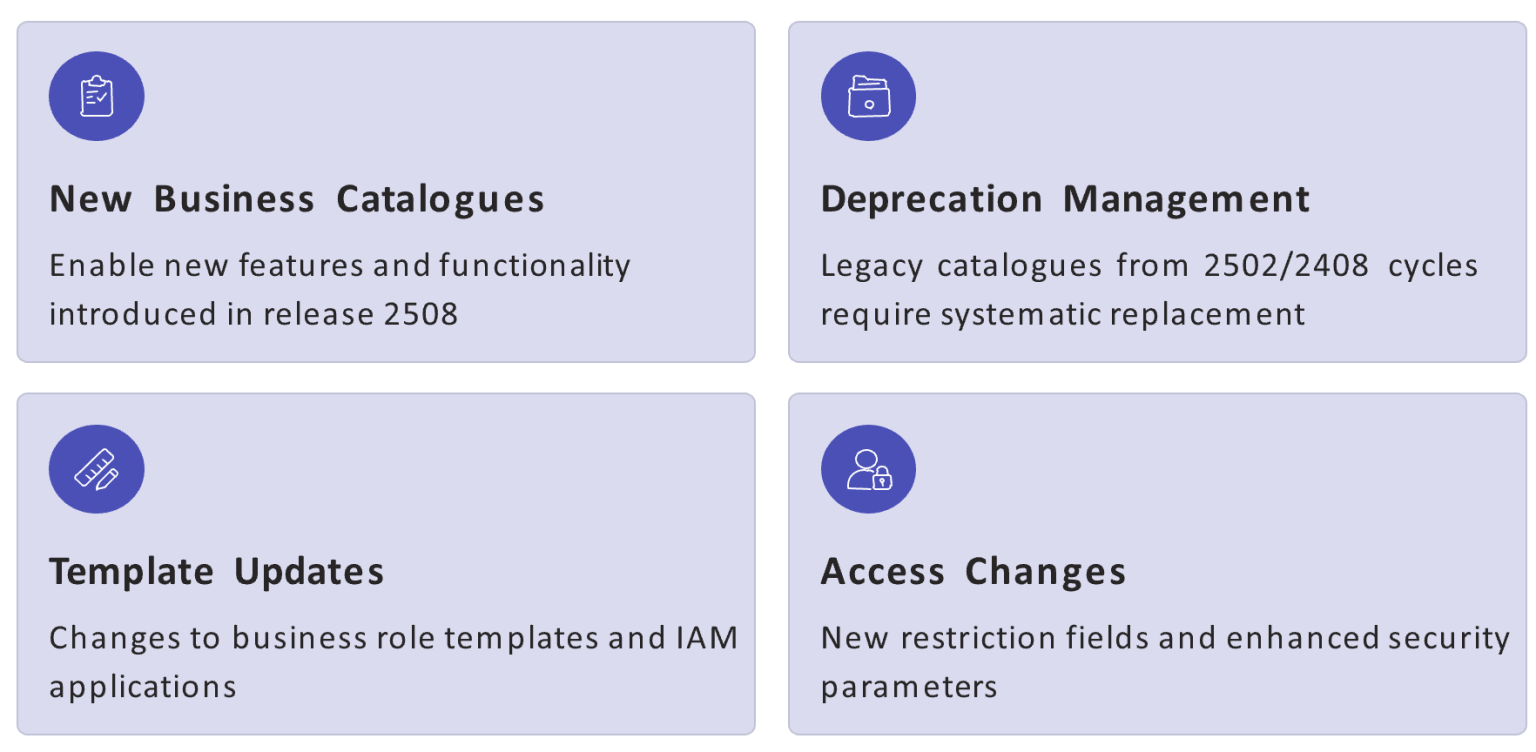
Each SAP Public Cloud upgrade introduces mandatory IAM changes that organisations must systematically address. For release 2508, organisations can expect new business catalogues to enable new features, deprecation of catalogues introduced in prior cycles, changes to business role templates, new or modified IAM apps, new restriction fields and access controls, and updated dependency catalogues between roles and apps.
Critical Risks of Inadequate IAM Management
Failure to adopt these changes may result in missing authorisations post-upgrade, business process disruption, incomplete or insecure access control, and compliance and audit findings. This makes structured IAM upgrade execution essential for maintaining operational integrity and regulatory compliance.
Recommended IAM Upgrade Framework for Release
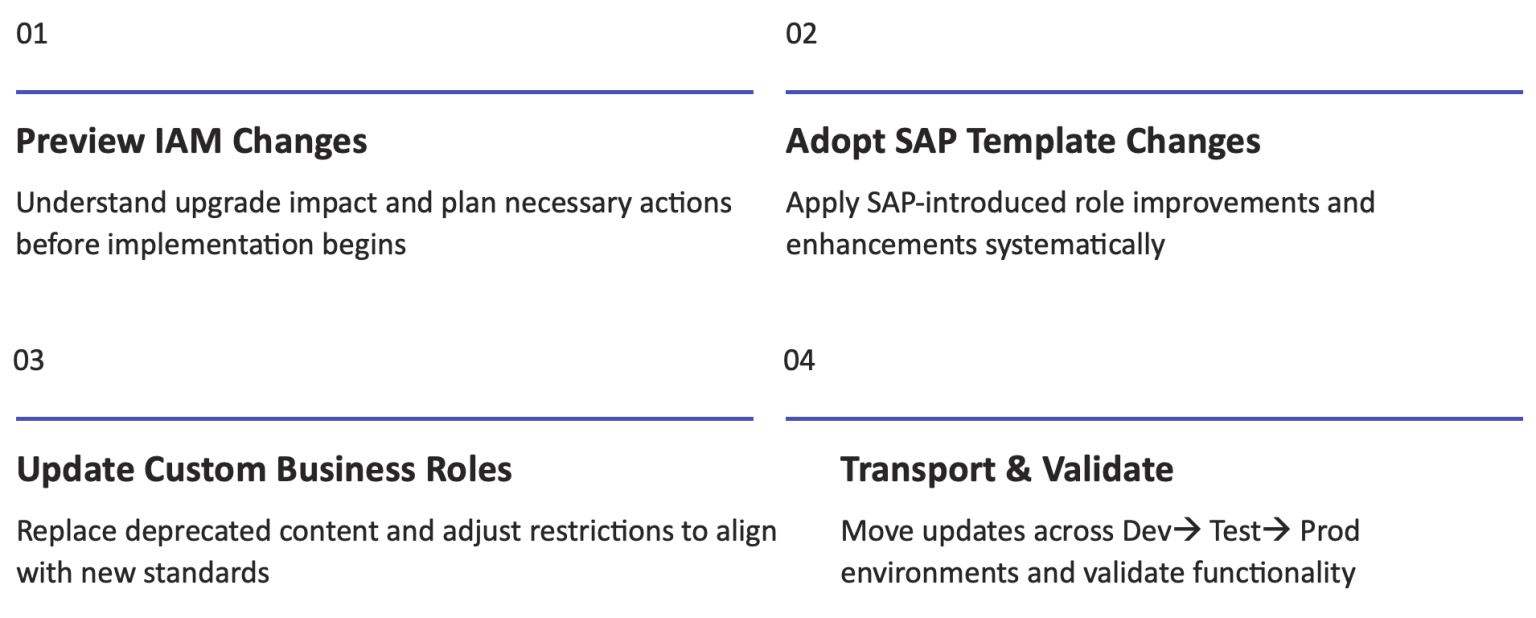
SAP follows a comprehensive four-pillar IAM framework for every release cycle, ensuring controlled and compliant access management at go-live. This structured approach provides organisations with a clear roadmap for navigating the complexities of IAM upgrades whilst maintaining security standards and operational continuity.
Upgrade Timeline spanning six distinct phases
Planning for Public Cloud IAM Upgrade Activities
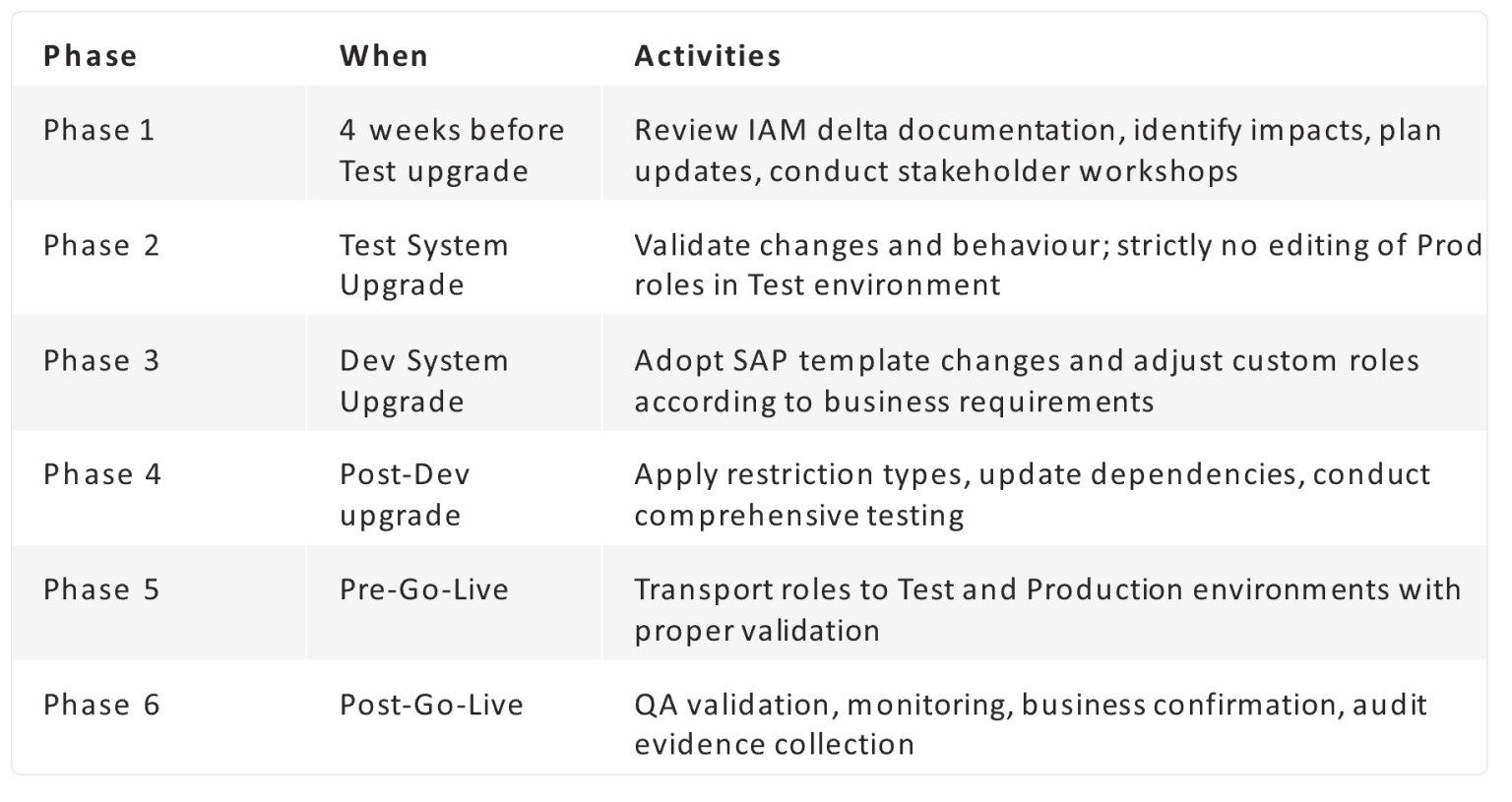
The 2508 IAM upgrade follows a carefully orchestrated timeline spanning six distinct phases, each with specific activities and deliverables. Understanding this timeline is crucial for effective resource planning, stakeholder coordination, and risk mitigation throughout the upgrade process.
Foundational phase for successful execution
Step-by-Step Execution: Pre-Release Preparation
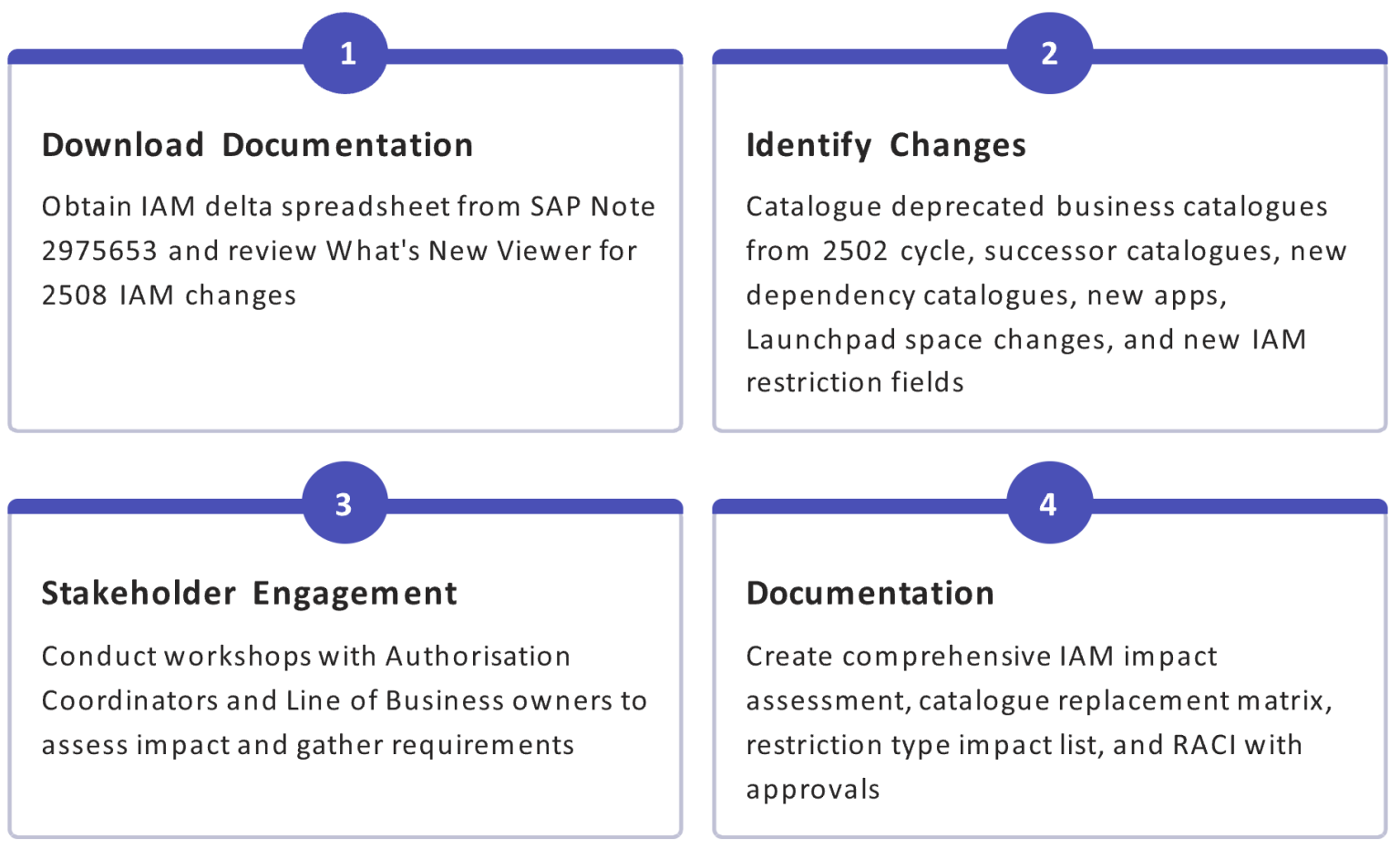
The pre-release preparation phase, conducted four weeks before the Test upgrade, is the foundation for successful IAM upgrade execution. This phase requires meticulous attention to detail and comprehensive stakeholder engagement to ensure that all potential impacts are identified and addressed before any system changes occur.
During this critical period, organisations must download and thoroughly review the IAM delta spreadsheet from SAP Note 2975653, which provides detailed information about all changes introduced in release 2508. The What's New Viewer offers additional context about new features and functionality that may impact IAM configurations.
Goal: No surprises when Test system upgrades. Complete preparation ensures smooth execution and minimises business disruption.
Test System Upgrade: Validate Behaviour
The Test system upgrade phase represents a critical validation checkpoint in the IAM release management process. During this phase, organisations must focus on understanding how the upgrade affects existing configurations without making any modifications to productive roles within the Test environment.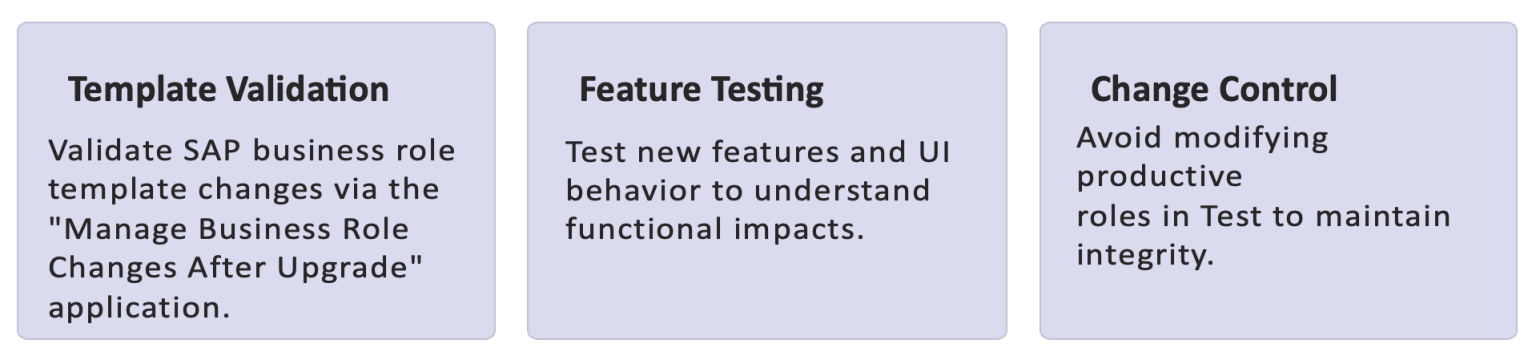
Systematic approach to role maintenance
Review Business Role Templates in the Manage Business Role Changes After Upgrade application to understand what SAP has modified in the standard templates. Test new features and UI behaviour to ensure that business processes will function as expected after the upgrade. This validation phase provides crucial insights that will inform the changes made in the Development environment.
The Test system serves as an observation environment during this phase, allowing teams to understand the upgrade's impact without risking productive configurations. All actual modifications will be performed in the Development environment following the prescribed change management process.
Upgrade Custom Business Roles
Development ? Test ? Production flow
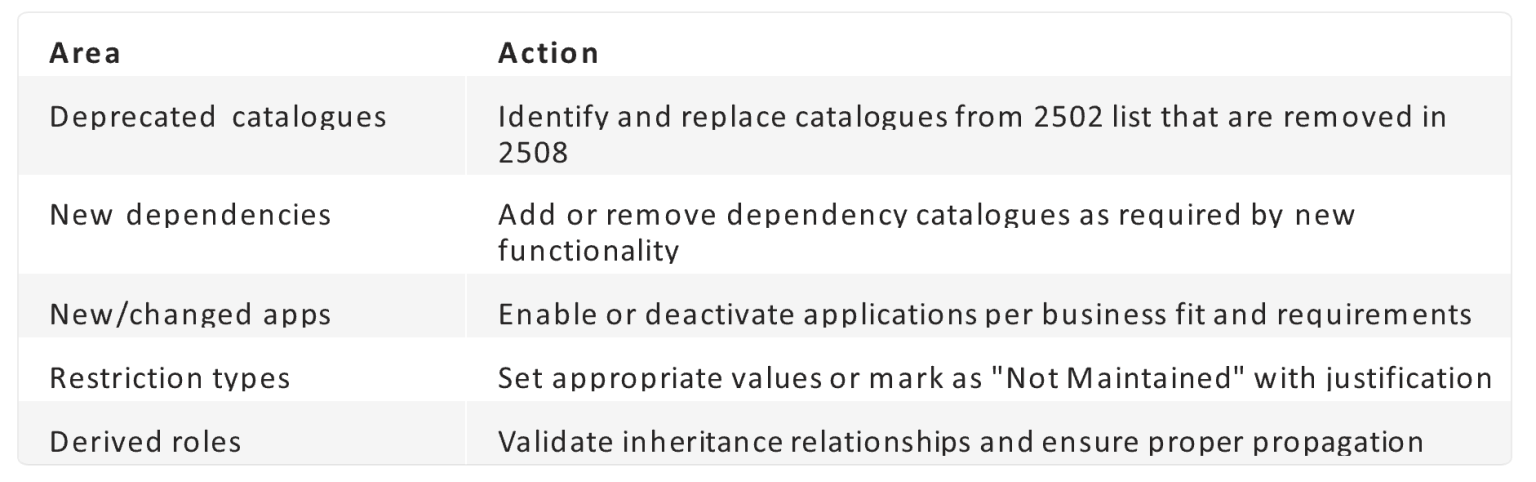
Upgrading custom business roles represents the most complex and critical phase of the IAM release management process. This phase requires systematic attention to multiple areas, each with specific requirements and validation steps to ensure comprehensive role maintenance.
- Manage Business Role Changes: Analyse differences between current and upgraded states, adopt changes systematically
- Business Catalogues App: Replace deprecated catalogues with successor versions and validate dependencies
- Maintain Business Roles: Update restrictions and perform manual adjustments as required by business needs
- IAM Key Figures: Validate unmaintained restriction fields and ensure complete configuration
Transport to Test & Production
The transport phase represents the culmination of all development work, moving validated IAM changes through the system landscape to Test and Production environments. This phase requires strict adherence to transport protocols and comprehensive validation procedures.
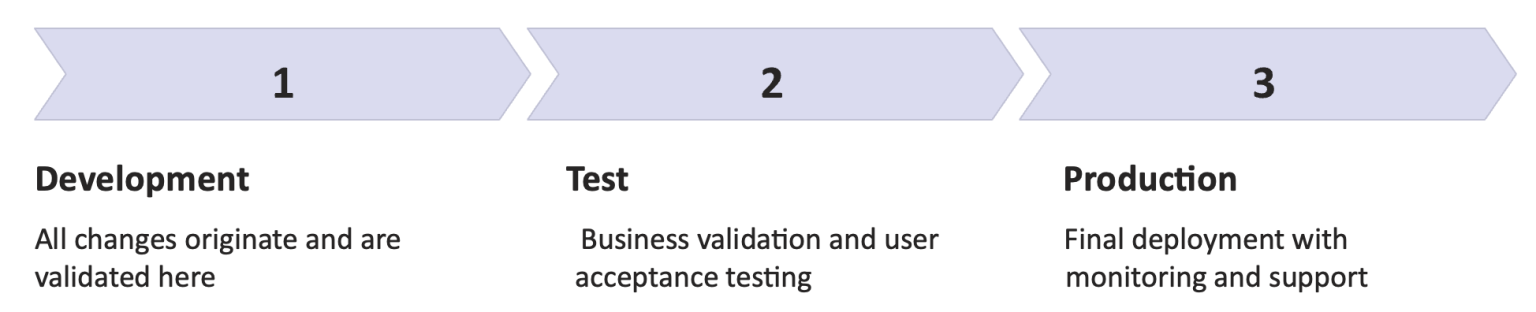
Recommended Method: Export Software Collection
Development Test Production
All changes originate and are Business validation and user Final deployment with validated here acceptance testing monitoring and support
Perform comprehensive business test scripts for all impacted roles before approving transport to Production. These test scripts should cover critical business processes, edge cases, and integration points to ensure that the upgraded roles function correctly in all scenarios.
The Export Software Collection method provides superior consistency and traceability compared to manual transport methods. It ensures that all related objects are transported together, maintaining dependencies and reducing the risk of incomplete or inconsistent deployments. Organisations should establish clear approval gates at each stage of the transport process, with documented sign-offs from technical teams, business stakeholders, and compliance functions. Recommended Method: Export Software Collection (recommended for consistency and reliability)
- Legacy Option: Manual download/upload (use only if Software Collection is unavailable)
Post-Go-Live QA & Governance
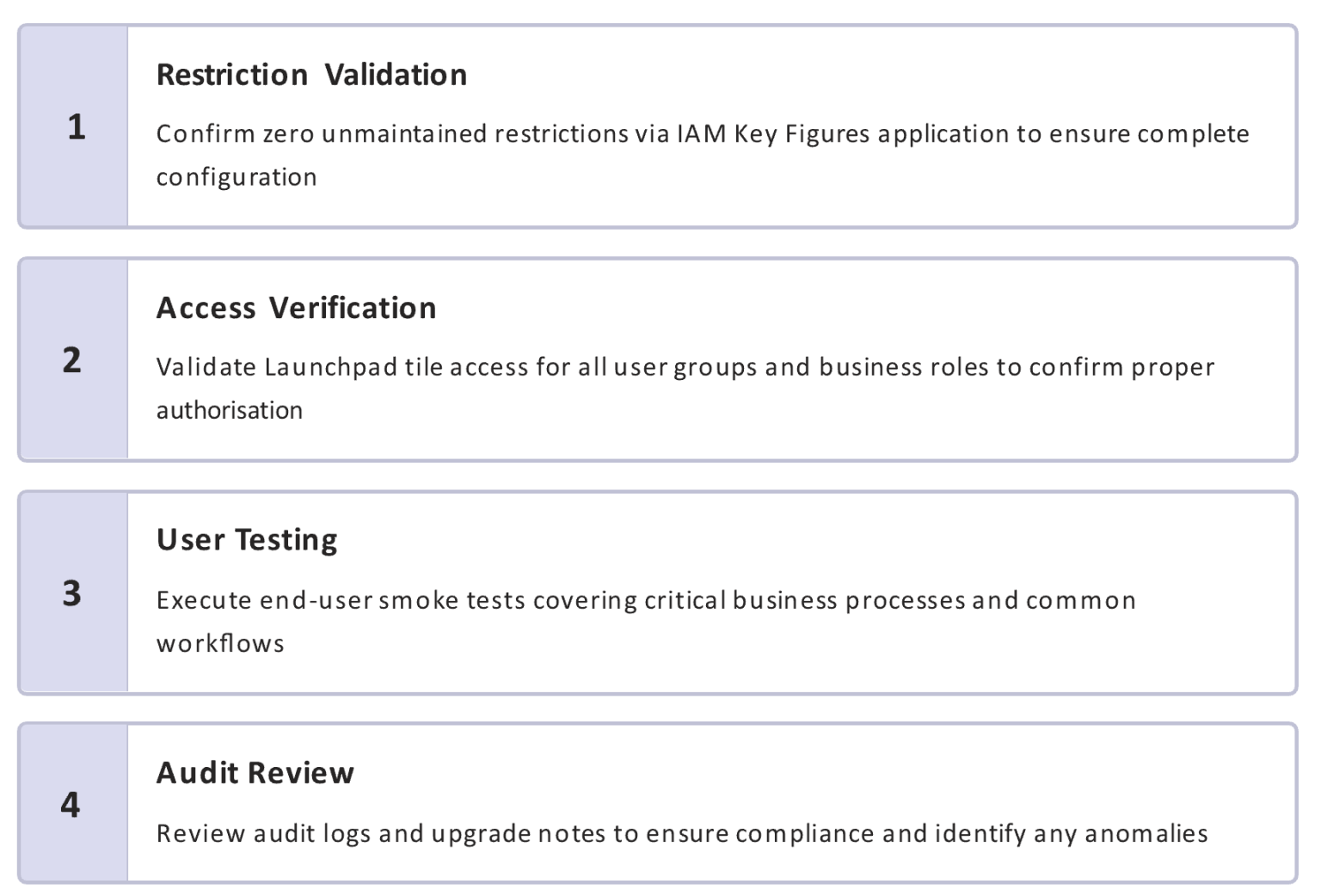
Validation using IAM Key Figures
The post-go-live phase is critical for ensuring that the IAM upgrade has been successfully implemented and that all systems are functioning as expected. This phase requires systematic validation, monitoring, and documentation to confirm that the upgrade objectives have been achieved.
Post-go-live validation should be conducted systematically over the first few days following Production deployment. Establish clear escalation procedures for any issues identified during this period, ensuring that technical teams and business stakeholders can respond quickly to resolve problems. Document all validation activities, test results, and issue resolutions to create a comprehensive audit trail that demonstrates due diligence and supports future upgrade cycles.
Common Pitfalls & How to Avoid Them
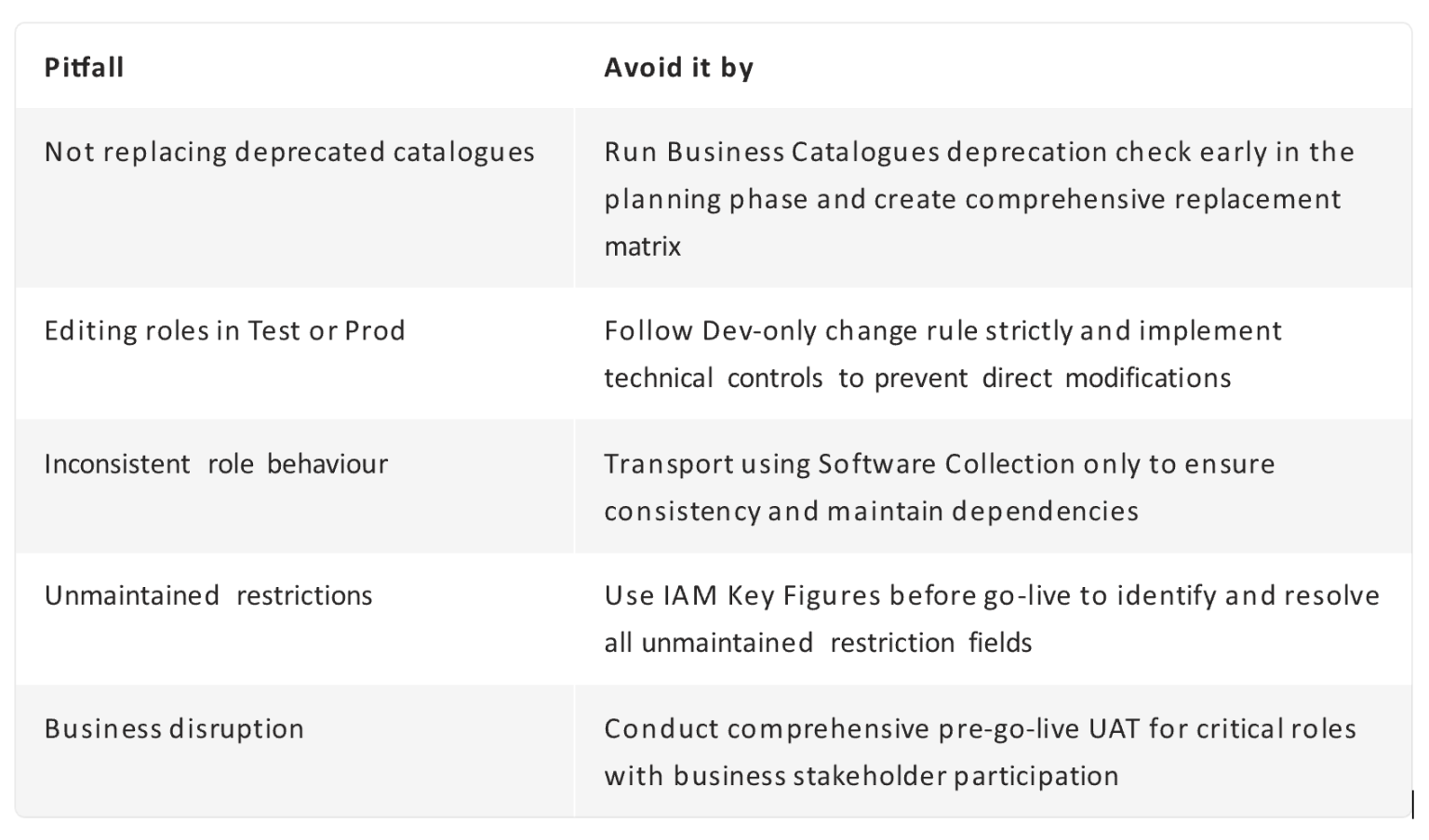
Key pitfalls to avoid during IAM upgrades
Understanding common pitfalls and implementing preventive measures is essential for successful IAM upgrade execution. These pitfalls have been identified through extensive experience with SAP Public Cloud upgrades and represent the most frequent causes of upgrade complications.
Best Practices for Smooth SAP Public Cloud- IAM Adoption
Implementing these best practices will significantly improve the likelihood of a successful IAM upgrade whilst minimising risks, reducing disruption, and ensuring that all stakeholders understand their roles and responsibilities throughout the process.
- Early Planning: Start planning 4-5 weeks pre-upgrade to allow sufficient time for analysis, stakeholder engagement, and preparation
- Selective Application: Never mass-apply changes without thorough business review to avoid over-assignment and security risks
- Catalogue Tracking: Track all deprecated and successor catalogues systematically to ensure complete replacement and avoid missing authorisations
- Restriction Validation: Validate role restrictions after upgrade using IAM Key Figures to confirm complete configuration
- Transport Discipline: Always follow Dev?Test?Prod discipline without exceptions to maintain change control and system integrity
These best practices represent lessons learned from numerous SAP Public Cloud upgrades across diverse organisations. Adhering to these principles will help organisations avoid common pitfalls, maintain security and compliance standards, and ensure that business operations continue smoothly throughout the upgrade process.