SAP license compliance is not driven by a single report or transaction. It is the outcome of multiple SAP-delivered mechanisms, each operating at a different stage of the licensing lifecycle. Organizations that fail to understand this layered model often struggle with rising SAP costs, repeated audit findings, and unnecessary investment in overlapping optimization tools.
At the core of SAP license measurement are three foundational components:
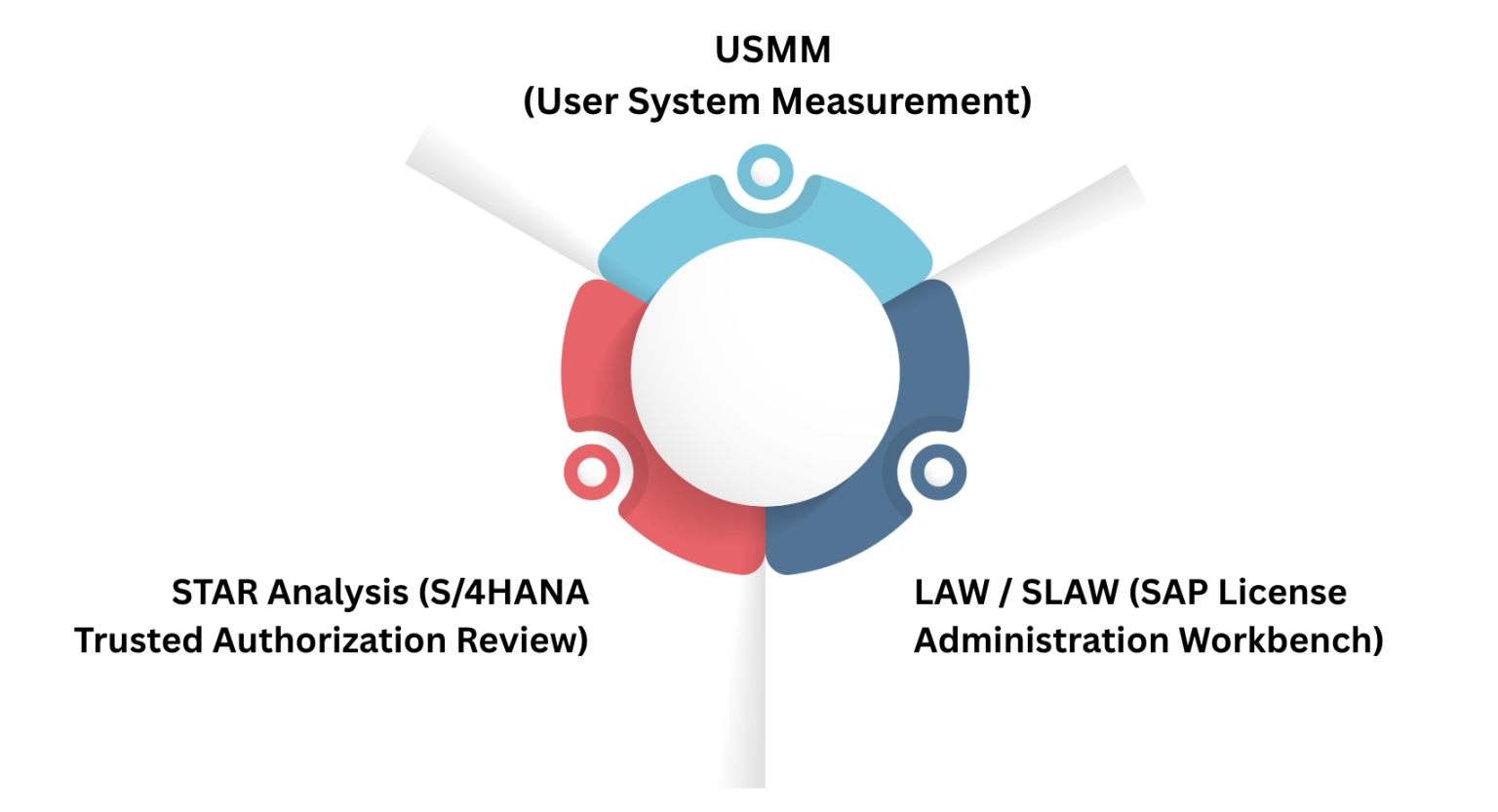
USMM, LAW/SLAW, and STAR - The three layers of SAP license measurement
While these are frequently referenced together, they serve distinct and non-interchangeable purposes. Understanding how they work together, and where optimization value truly resides, is essential for sustainable SAP license governance.
USMM: The Data Collection Layer
USMM is the starting point of SAP license measurement. Its responsibility is purely factual and technical. USMM captures named users, engines, and package usage. It classifies users based on technical attributes and is used to generate system-level measurement data.
USMM does not:
- Interpret business relevance
- Optimize license assignments
- Assess authorization-driven over-classification
USMM answers only one question:
"What usage data exists in the system?"
LAW / SLAW: The Compliance and Consolidation Layer
LAW (and its successor SLAW/SLAW2) is the official SAP consolidation mechanism used during license measurement cycles.
LAW/SLAW consolidates USMM results across multiple SAP systems, applies contractual aggregation and measurement rules defined by SAP and produces the consolidated compliance position shared during audits.
LAW/SLAW does not:
- Analyze authorizations
- Identify optimization opportunities
- Explain why and how licenses are consumed
"What is the consolidated compliance position?"
STAR Analysis: The Intelligence and Optimization Layer
STAR (S/4HANA Trusted Authorization Review) Analysis operates at a fundamentally different level. Rather than relying on technical user types alone, STAR:
- Analyzes user authorizations and role content
- Determines the minimum required license classification
- Identifies over-licensed and misclassified users
- Highlights systemic role wise licensing information
STAR answers the most critical question in SAP licensing:
"What license is actually required based on what users are allowed to do?"
This is where true optimization insight is created. All three are required, but only STAR produces actionable intelligence.
Key Takeaway:
SAP license measurement is a layered process:
- USMM collects
- LAW/SLAW consolidates
- STAR explains and optimizes
Organizations that focus only on measurement remain reactive. Those that operationalize STAR move toward continuous license intelligence, lower audit exposure, and controlled SAP spend.
The most sustainable SAP license optimization strategy does not begin with buying more tools; it begins with fully using what SAP already provides.